News

- The event offered a comprehensive overview of this chemical element, addressing its production processes and its contribution to regional development, health and innovation.
The seminar “Challenges and Opportunities for the Iodine Industry,” organized by the Antofagasta Region Secretariat of Mining and SQM Iodine Plant Nutrition, in collaboration with the Secretariat of Health, the Antofagasta and Atacama Secretariats of Science, and the National Geology and Mining Service (Sernageomin), was widely attended by authorities, specialists, representatives from the academic world and students.

The conference sought to provide a comprehensive overview of the industry, which is so important for the country, a world leader in iodine production, and particularly for the Antofagasta Region, noted for its scientific, technological and innovation capacity. Speakers also discussed the production processes, scientific advances, industrial applications and, especially, the impact of iodine on people’s health.
“The value of this meeting lies in the dialogue between academia, students and the public and private sectors, to make progress on such a fundamental element as iodine,” said Luis Ayala, the Secretary of Mining for the Antofagasta Region.
From an industry perspective, Rodrigo Vera, Vice President Planning and Projects at SQM Iodine Plant Nutrition, valued the space as an opportunity to bring the company’s experience as the world’s largest producer of iodine to the community. “We are looking for everyone to get interested in and understand what is happening in this industry, which is an essential part of Chile’s present and future,” he said.
For his part, Alberto Godoy, the Secretary of Health for the Antofagasta Region, emphasized that “we seek to reinforce the benefit of iodine to the community. For example, the use of iodized salt is a public policy implemented to prevent iodine deficiency and its consequences on health, mainly hypothyroidism and goiter.”
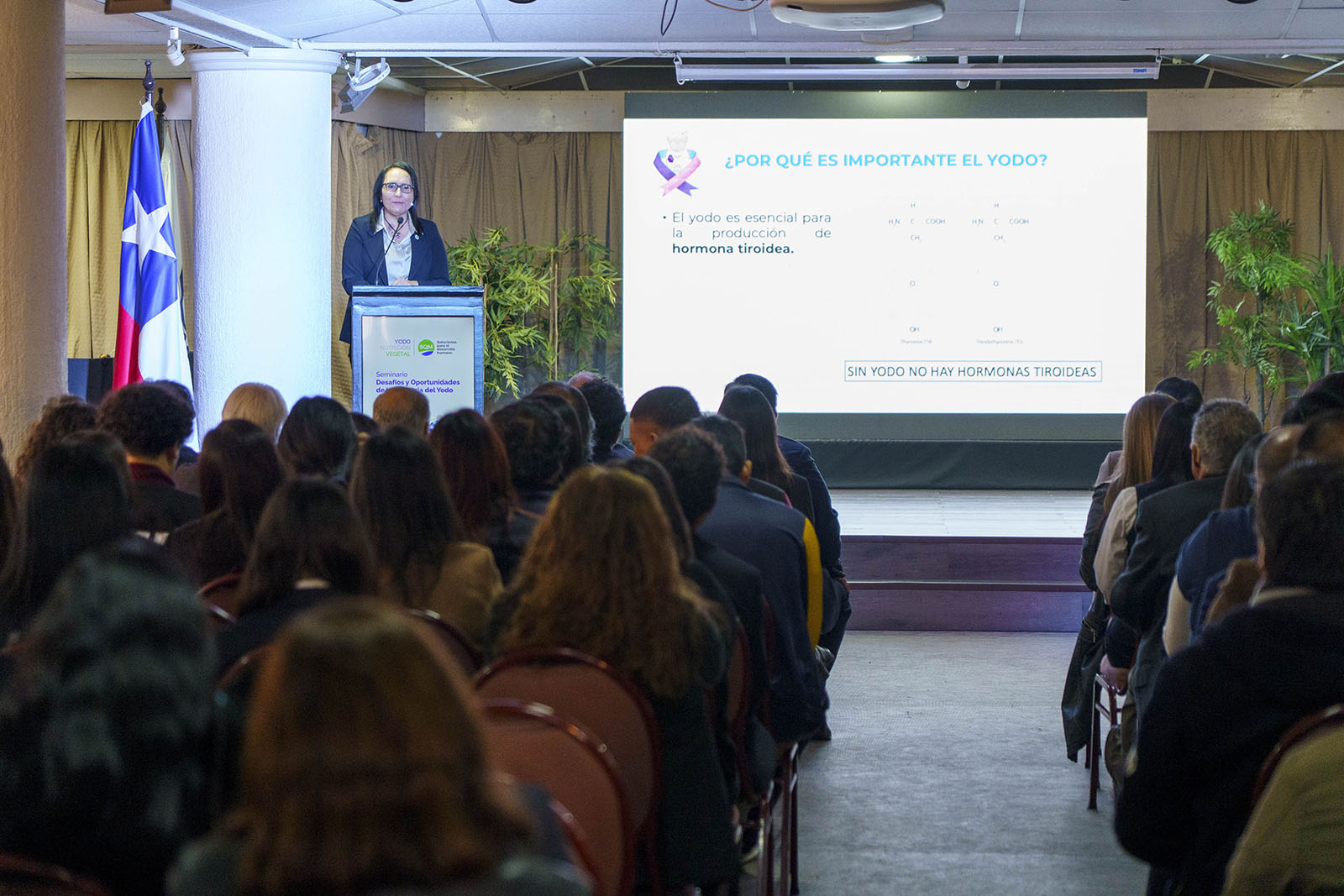
One of the most outstanding speeches of the day was given by Dr. Lorena Mosso, a physician from Pontificia Universidad Católica de Chile who specializes in endocrinology and thyroid diseases, who gave a presentation on the role of iodine in physical and cognitive development.
“Iodine is so important that between 1920 and 1930 salt iodization was implemented worldwide as a preventive measure. Its deficiency can cause serious health problems, especially during pregnancy and childhood, so it is key to continue educating about its consumption, for example, through iodized salt.”
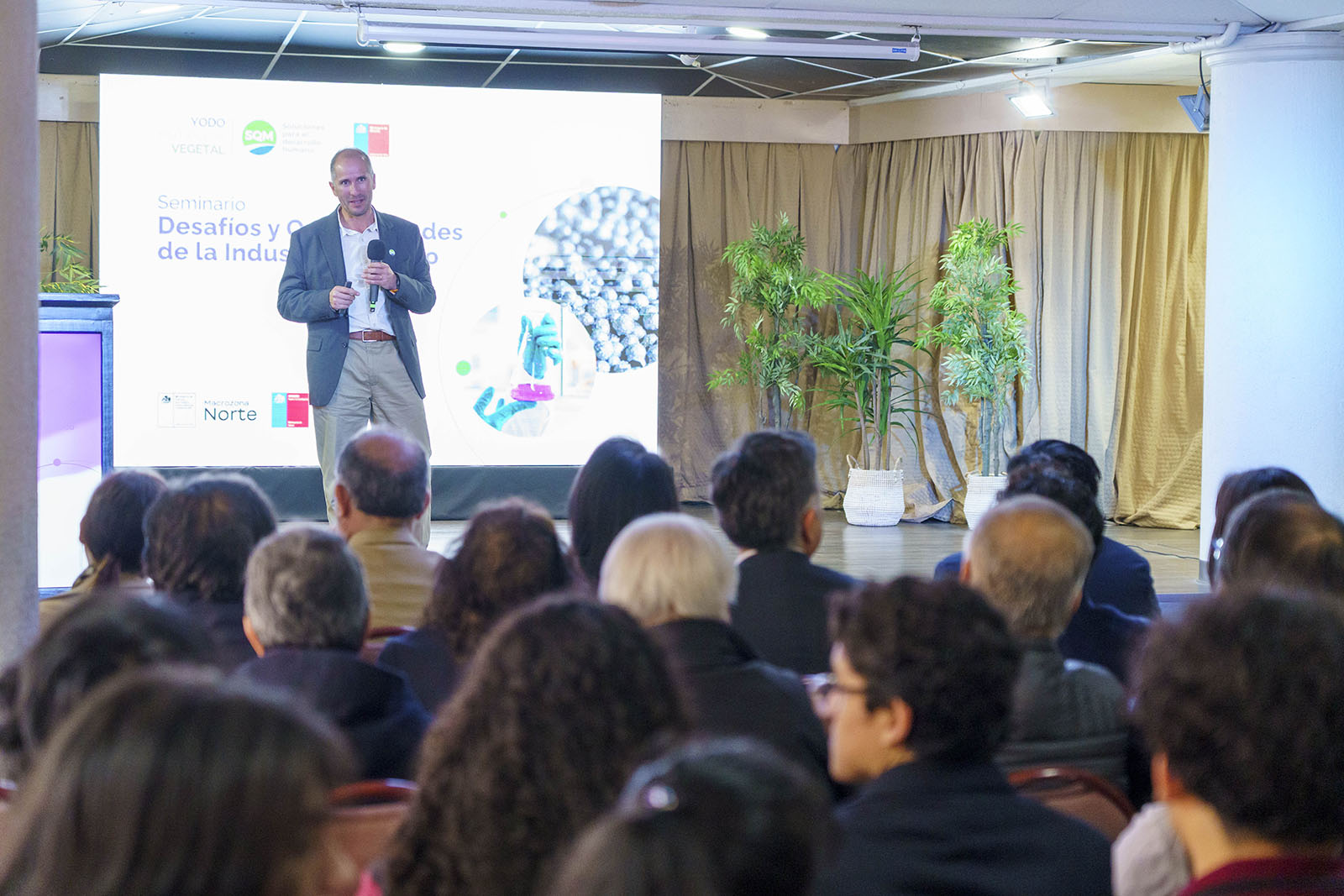
In this context, Romina Figueroa, the Secretary of Science for the Antofagasta and Atacama regions, highlighted that “the seminar allowed young people to learn about the multiple applications of iodine, from improvements in its processes to its use in medicine.”
The meeting was also attended by María Elisa Taboada and Teófilo Graber, both PhDs in Engineering Sciences with a mention in chemistry from Universidad de Antofagasta, who presented research on the use of iodine to leach copper sulfide ores, opening new paths for the mining industry.
The event ended with an open discussion on the challenges and opportunities of iodine, from its production to its most innovative applications.