Asparagus cultivation: Key factors for high productivity
The cultivation of asparagus (Asparagus officinalis) requires careful management of soil (edaphic factors) and water (hydric factors) conditions to ensure good crop establishment, high productivity, and a long shelf life for the asparagus plant.
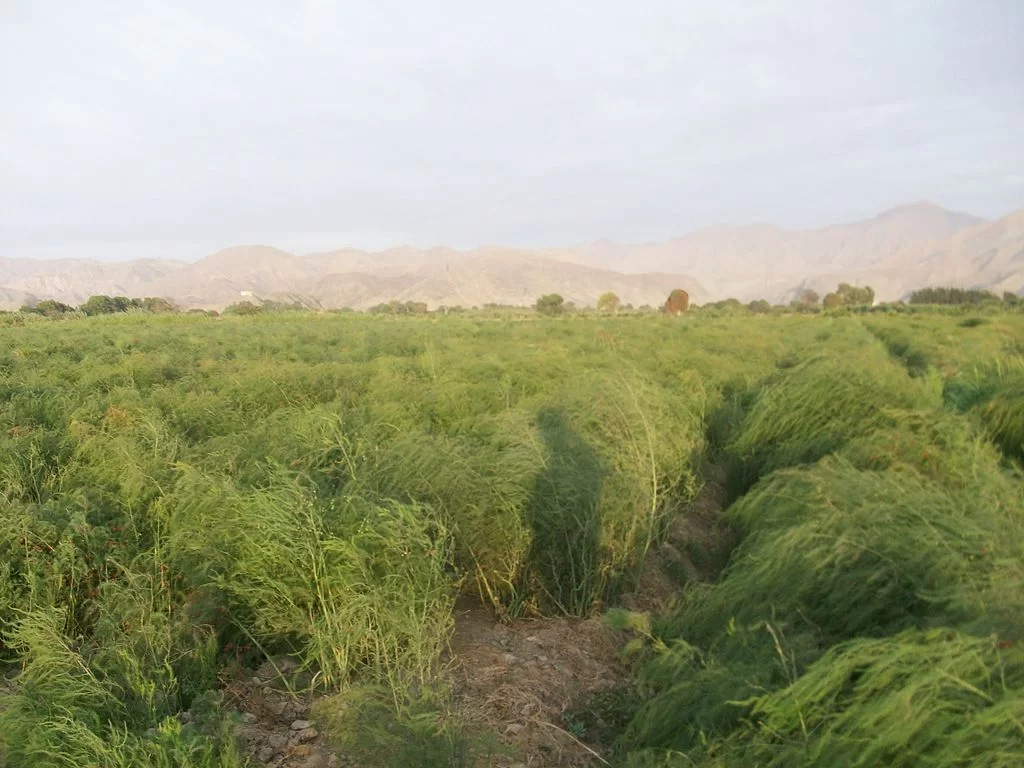
The following table presents some considerations regarding soil and water factors that are important for asparagus cultivation.
SQM nutritional program. Includes higher amounts of K, Ca, and B.
|
Factors |
Optimal |
Favorable |
Unfavorable |
|---|---|---|---|
|
EDAPHIC |
|||
|
TEXTURE |
Sandy loam |
Sandy loam |
Clay loam |
|
PERMEABILITY |
Moderate – fast |
moderate |
Slow – fast |
|
DEPTH |
More than 1.5 m |
0.75 – 1.50 m |
Less than 0.75 m |
|
DRAINAGE |
Good |
Water table < 1 m depth |
Water table < 1 m depth |
|
REACTION (pH) |
6.5 – 7.8 |
6.0 – 6.5 – 7.8 – 8.3 |
< 6.5 and > 8.3 |
|
SALTS |
< 4.1 dS/m |
4.1 – 10 dS/m |
> 10 dS/m |
|
FERTILITY (N, P, K) |
3 parameters at high level |
2 parameters at high level |
At least 1 parameter at high level |
|
BORON |
< 10 ppm |
10 – 15 ppm |
> 15 ppm |
|
HYDRIC E.C. |
< 3 dS/m |
3.0 – 6.0 dS/m |
> 6.0 dS/m |
|
SAR |
< 3 |
3.0 – 8.0 |
> 8.0 |
|
BORON |
< 3 |
2.0 – 5.0 ppm |
> 5.0 ppm |
Water management and vegetative cycle
Asparagus (Asparagus officinalis) is a crop with good drought tolerance; however, if drought occurs during the harvest stage, the quality of the shoots is compromised, with a decrease in thickness and turgidity.
To achieve maximum yield, it is best to maintain the soil at field capacity*, ensuring a constant supply of water, adequate availability of nutrients, and avoiding the accumulation of salts above tolerance levels, especially in arid areas.
The vegetative period of asparagus varies depending on the type of planting: 12 months for direct planting and around 9 months for seedling planting.
Once harvesting is complete, the plant begins to develop stems and leaves (cladodes) in order to stimulate photosynthesis until it reaches its maximum growth.
The products of photosynthesis are translocated to the rhizomes and roots, where they are stored as reserves. These reserves enable the formation of new buds, which will give rise to the shoots of the following season, thus ensuring the continuity and productivity of the crop.
(*): Agronomic term. Refers to the water content that soil is capable of retaining after being saturated or thoroughly wet and then allowed to drain freely
Related newsSee all news →



Rate certificates
Beginning with tax year 2020, Professional Fees Certificates must be requested by email, indicating your name and national identity card number.
Email us at [email protected] to access this information.

Supplier consultation
Dear suppliers:
If you have any questions regarding Purchase Orders (POs), please send us the document in PDF or JPG format (photograph) to the following email address: [email protected].
Please ensure that the PO is legible, especially the following fields: Company Name, order number, and the buyer’s name and contact details.
We will respond to your inquiries within 24 hours.